Prosper · Senior UX Director
Design at Prosper: how a lean UX practice returned $100M+
An inside look at how UX runs at Prosper—three specialist disciplines, embedded directly in the squads, validating the right problems before engineering builds—and the enterprise impact a disciplined 15-person team produced in a single year.
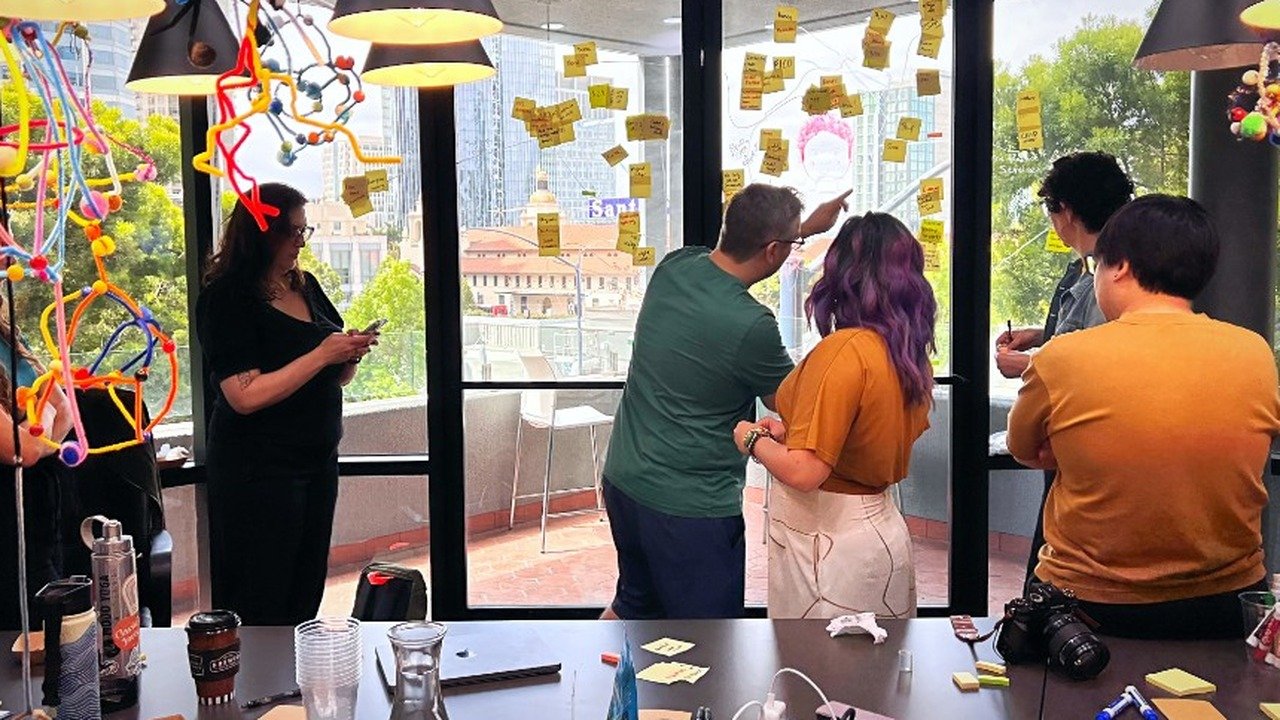
Summary.
At Prosper, UX is the systematic work of turning user behavior into business value—validating the right problems to solve before engineering builds the solution. A lean, research-led team, sitting at or below every industry staffing ratio and embedded directly in the product squads, was central to more than $100M in incremental originations in 2025, alongside millions in collections loss savings. At the same time, the team built its own AI tooling to compress the repeatable work and keep people focused on the breakthroughs.
Project overview.
Overview
“Design at Prosper” is the operating model for the UX practice—how the team is built, how the work happens day to day, what it returns, and where AI takes it next. Three specialist disciplines (research, product design, and content design) run an industry-standard design-thinking loop, each leading where its depth pays off.
Goal
To make design’s contribution legible and compounding: de-risk the roadmap by validating problems before engineering begins, prove every win with in-market evidence rather than assertion, and scale a deliberately lean team through AI leverage instead of headcount.
Responsibilities
As Senior UX Director I own the practice’s strategy, org design, and staffing model, the operating model and craft leadership, partnership with Product and Engineering, impact measurement with analytics, and the AI roadmap—both the in-house tooling and the human-in-the-lead guardrails around it.
Understanding & defining the problem.
Design’s impact is easy to underestimate from the outside. It ships inside cross-functional work—Product sets the priorities, Engineering builds the solution—so the wins often get credited elsewhere, and the practice that produced them becomes the easiest line to question.
That blind spot was compounded by three realities:
- Credit lands elsewhere. Design never ships alone, so its specific contribution is hard to see and easy to undervalue—even when it set the direction the whole team followed.
- A deliberately lean team. We operate at the floor of every industry staffing ratio—roughly one designer per ten engineers and about 11% of combined Product and Engineering headcount—with no surplus capacity to fall back on.
- Assertion isn’t proof. To defend and grow the practice, every claim of impact had to be tied to validated, in-market results rather than opinion.
The problem, then, was not whether UX created value—it was how to run a disciplined, not bloated, team that could prove that value and scale it, turning a structural blind spot into a compounding advantage.
The model.
01
How we run UX
Three specialist disciplines
At Prosper, UX is split into three crafts, each catching what the others can’t. Each de-risks a different part of the work, and the gains come from running them deep rather than blending them into one role.
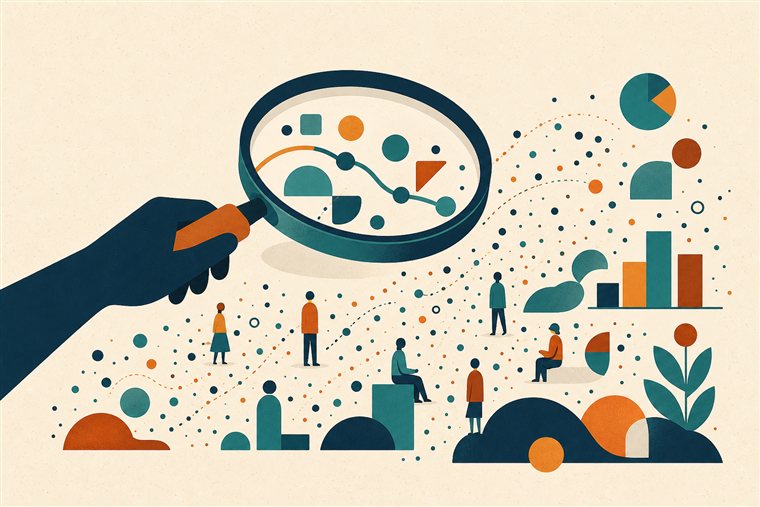
UX Research
What it does
De-risks the product roadmap by validating the exact problems to solve before engineering begins work.
Example
Identifying exactly why users abandon a verification step before we burn a sprint guessing the fix and release a production test that costs us real users.
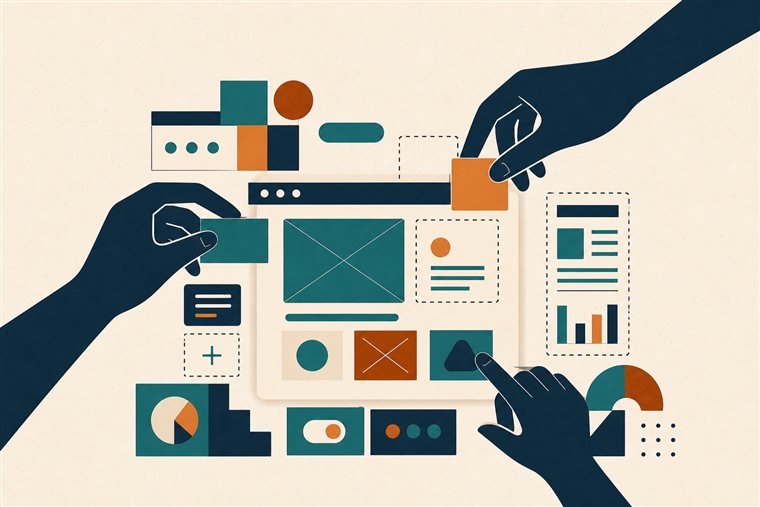
Product Design
What it does
Architects the interactive logic that turns business requirements into low-friction, customer-facing interfaces.
Example
Synthesizing complex business rules and deep organizational context to pioneer a custom interaction model for a highly nuanced workflow.
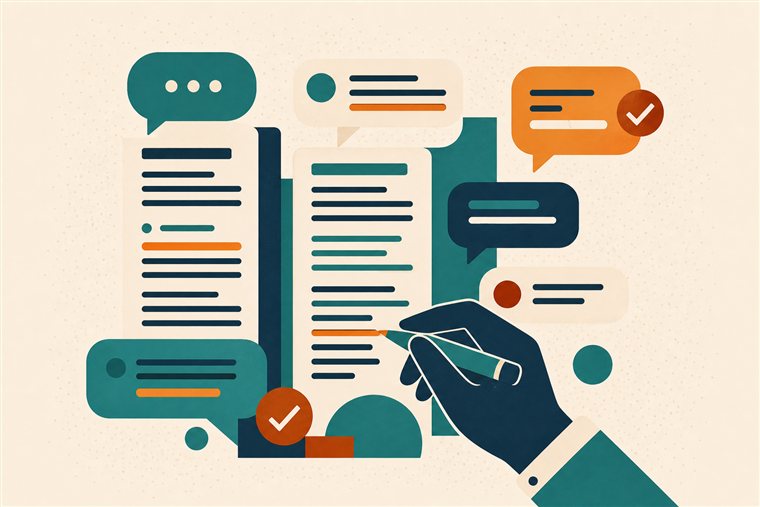
Content Design
What it does
Structures the strategic messaging and contextual guidance that drives the customer journey.
Example
Rewriting an intimidating legal disclaimer into plain language that builds trust and keeps the user moving forward.
Three distinct disciplines — each catches what the others can’t.
We run three disciplines rather than one generalist because, at our scale, depth is what produces the gains. A generalist covers a lot at moderate quality, but breadth without depth quietly accumulates design debt; a T-shaped specialist compounds—catching issues earlier, cutting rework, and freeing capacity.
Asking a product designer to run high-quality research is like hiring a handyman instead of an electrician. The work gets done and the lights come on — the difference surfaces at the next remodel, when the inspector flags what isn’t to code and you pay for the same job twice.
The crafts compose through design thinking. Design never ships alone, so each phase has a clear lead where its depth pays off, and what we learn in production restarts the loop.
Three movements — Understand, Explore, Materialize — across six phases, each with a clear lead.
Discover
Go to the source. Field studies, interviews, and behavioral data build a real picture of what users do.
Research leads
Define
Synthesize the evidence into the precise problem worth solving — before a sprint is spent on it.
Research leads
Ideate
Generate a wide range of solutions before committing to one. Volume first, judgment second.
Design & Content
Prototype
Make the strongest ideas tangible — real screens, real copy — cheap enough to throw away.
Design & Content
Test
Put prototypes in front of real users. The evidence decides what ships — not opinion.
Research leads
Implement
Build, ship, and instrument the validated solution. What we learn in production restarts the loop.
Engineering builds
One full pass, Discover to Implement, is how a single insight becomes a tested improvement in production — and what we learn there starts the next pass.
02
How we’re built
Built to match how Prosper ships
UX isn’t a separate department that work passes through. It’s woven into the squads, and our structure mirrors how Product and Engineering are laid out: product designers embedded—not pooled—across the squads, with a researcher and content designer paired to each product team.
Personal Loan & Platform
Manager · 5 squads
Card & Core
Manager · 4 squads
Research & Content
Practice lead · 5 people
A researcher + content designer pair serves each product team, working across its squads rather than inside one. Led by a manager with hands-on research depth.
Numbers on squads show embedded designer coverage (including a 0.5 contractor across Personal Loan & Platform). The bands are the research and content pairs — each covers its team’s squads, every squad except Design System.
14.5
people in the UX practice
15.5 including the Director
Design sits where the work happens — that’s exactly why it multiplies the teams you already have.
It is also, by design, lean. We sit at the floor of every industry-standard ratio: a disciplined team, not a bloated one.
Designers per engineer
Thin end of the industry range
Prosper
1 : 10
Researcher per designer
Slightly above the industry benchmark
Prosper
1 : 4
UX as % of Product + Eng
Right at the benchmark, no surplus
Prosper
~11%
Source: NN/g 2024, n=557 · marker = Prosper, band = industry range, line = industry benchmark
Because design sits where the work actually happens, that lean team multiplies the much larger org around it instead of bottlenecking it.
03
In practice
What “UX-driven” means — proven in market
Everything ships as a team, so we hold a deliberately high bar for what counts as UX-driven—two things both have to be true. First, a UX insight set the direction: research or craft judgment surfaced something that materially changed where the solution landed, rather than a spec handed to us to execute. Second, UX craft shaped what shipped: the flow, the copy, and the interaction model materially influenced what went live.
Three 2025 wins clear that bar—each a contribution product analytics alone could not have produced:
UXR-led
Cash to You
Research championed this for years: borrowers were frustrated their deposit landed smaller than expected — the loan, less the origination fee. Iteration found the balance: a transparent screen after the offer where borrowers can raise their amount to cover the fee. They didn’t feel forced, and loan amounts rose.
$20M+
incremental originations, annualized
$1M+ directly attributable to content tests
UXR-led · Product Design
Loan Upsell
Research-led from ideation to hand-off. A page right before the offer shows borrowers their full approved amount, framed around covering unexpected expenses, with the choice between the full amount and what they first requested. Presenting the higher number upfront lifted the amounts borrowers took.
$10M+
incremental Marketplace originations
2025
Research-led
Collections hardship
Enrolling in a hardship program is one of the hardest decisions a customer makes. Research user-tested every flow before launch, forcing a reevaluation of our collections tone; content design made difficult terms clear and put business-preferred options first without overwhelming anyone.
>2×
enrollment with UX-written copy
vs. consultant-written copy · Dec 2025
Product analytics captures the what. UX surfaces the why — and turns it into work that moves the number.
04
The proof
The contribution is visible — and so is its absence
The cleanest proof of UX’s contribution is a direct before-and-after on the same kind of work—where the only variable that changed was whether UX owned it. Same product category, two outcomes: a white-labeled, third-party-designed card app versus Prosper’s Credit Card app, built under in-house UX ownership.
Credit Card App · same category, opposite outcome
App Store ratings — the only variable that changed was whether UX owned the work.
The collections hardship work told the same story from the other direction. Against an outside vendor’s demanding tone, our empathetic, research-driven copy more than doubled enrollments across every delinquency bucket—same audiences, same offer, only the words differed. That result anchors the impact in the next section.
05
Where it goes
Where AI takes this
Design runs on two tracks, and AI is well-suited to one of them. The same lean team, plus AI, means a shorter design cycle and faster features to market — a leverage multiplier, not a headcount substitute.
Iterative Optimizing the known
We have a working product, and the goal is making it perform better. We experiment with layouts, test messaging, and measure what drives the highest user action. The process is highly predictable and relies on continuous iteration.
AI fit · StrongExceptional fit. AI excels at scaling these tasks by building components, drafting text, and creating multiple test variants instantly.
Innovative Building 0 to 1
We start with a blank slate. The work requires uncovering hidden customer needs and deciding which problems justify our investment. Breakthrough products require deep empathy to find the right solution.
AI fit · TargetedApplied more narrowly. AI accelerates synthesis and prototyping here — but uncovering hidden friction and deciding what to build stays human.
AI compresses the first track. That buys the team more time for the second, where the breakthroughs come from.
So we point AI at the first track and keep humans on the second. On the known, repeatable work we don’t just use AI—we build our own.
AI leans in
The iterative + operational track
On the known, repeatable work, three in-house tools are doing production work today:
Humans lead
The 0→1 + judgment track
Inventing new experiences, and the calls that carry revenue risk, stay human:
Final result and impact.
Add up that kind of work across 2025. Design doesn’t ship anything alone—every initiative here was built with Engineering and prioritized with Product—but this is the work UX was central to, and the numbers it was central to are enterprise-scale.
$100M+
Incremental originations, annualized
Personal Loan Marketplace originations UX was central to in 2025, running at a $5M+ monthly rate—built with Engineering and prioritized with Product.
$5M+
Annual collections loss savings
Empathetic, research-led hardship flows kept money Prosper would otherwise have lost—value created by helping customers, not just selling to them.
$10M+
From a single research-led bet
The Loan Upsell flow—owned by research from ideation to hand-off—added this in incremental Marketplace originations in 2025 alone.
2.3×
Enrollment vs. a paid consultant
In a like-for-like test, in-house UX copy enrolled 2.3× more customers in hardship plans than a third-party consultant’s—only the words differed.
What makes the model work.
Design’s impact compounds when the practice is built deliberately. Three principles run through everything above.
Principle 01
Depth over breadth. Three specialist crafts, not one generalist. At scale, depth is what produces the gains—it catches issues earlier, cuts rework, and frees capacity—while breadth without depth quietly accumulates design debt the business pays for later.
Principle 02
Embedded, not pooled. Design sits inside the squads where the work happens, mirroring Product and Engineering. That’s exactly why a 15-person team can multiply the much larger organization around it instead of becoming a queue it waits on.
Principle 03
Validated, not asserted. Nothing counts as a UX win unless a real insight set the direction and the result showed up in market. Every number here is tied to in-market evidence rather than opinion—which is what makes the practice defensible and fundable.
Where this goes next.
The structure above is what turns each year’s results into the next year’s pipeline. The 2026 slate is already ramping—live, measured work plus a set of pre-launch bets—with combined annualized impact building toward year-end.
Offer Page Modular Design
Design sprint + UXR usability studies; mobile-first IA & content
Coborrower 3-Step Refresh
UXR-driven joint-application redesign · launched April, ramping
Prosper Unified Mobile App
Unlocks personal-loan second-loan cross-sell in servicing
Credit Card 2026 · 11 UX initiatives
Card initiatives ramping through the year
Two initiatives are already live and measured; the rest are ramping through 2026. Combined annualized impact is tracked by Prosper Product Analytics — dollar figures held back here for confidentiality.
The bigger shift is AI. As it drops the barrier to shipping toward zero, product parity becomes the baseline and the moat moves from whether you built something to how it feels to use.
The shift
AI drops the barrier to shipping to near zero. Product parity becomes the baseline. The moat moves from whether you built it to how it feels to use.
The consequence
AI-generated products converge on the average. Thoughtful, customer-specific design pulls away from it. That gap is the edge.
For Prosper
In trust-sensitive financial products, design is the signal. Customers decide in seconds whether they feel safe.